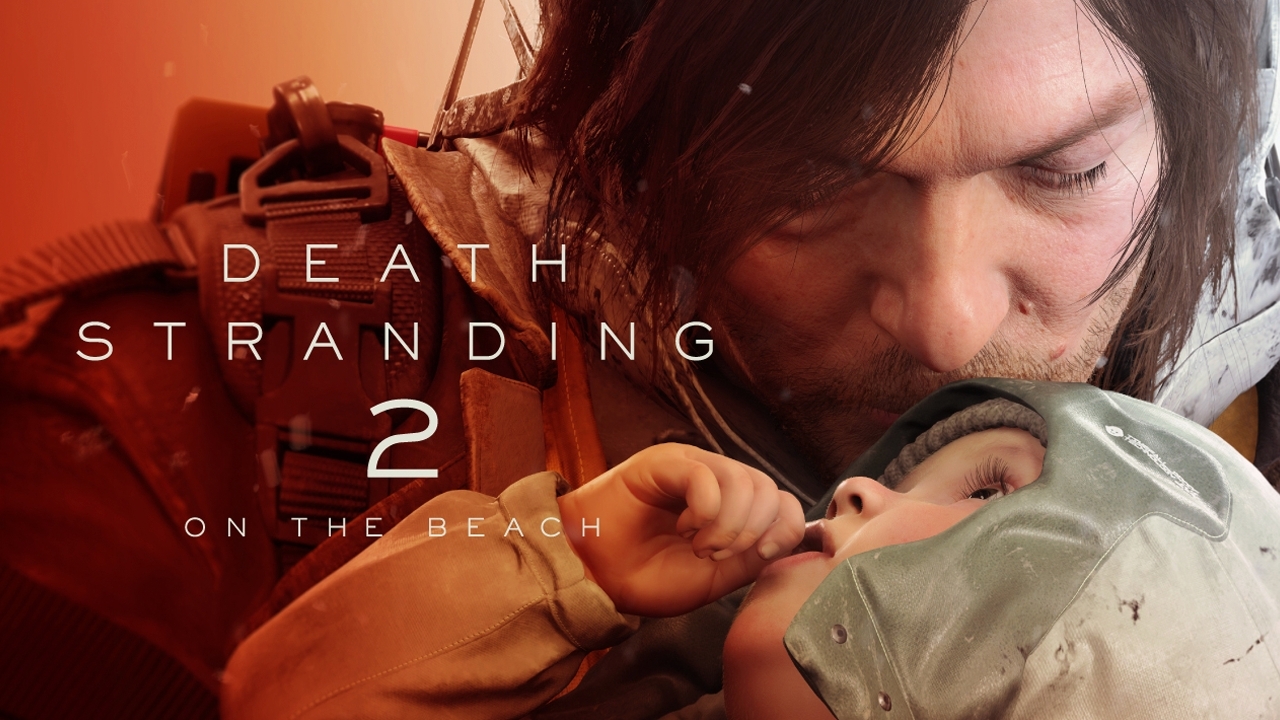
Developer: Kojima Productions
Platform: PS5
Release Date: June 26, 2025
Genre: Action / Adventure / Walking Simulator
Playtime: ~40 hours (main story)
🧭 Overview
Death Stranding 2: On the Beach is Hideo Kojima’s most ambitious and self-reflective work to date. It builds on the divisive foundation of the original, refining its mechanics while doubling down on its surreal, meditative tone. The result is a game that’s both more accessible and more indulgent—an experience that’s as likely to inspire awe as it is to bewilder.
🌍 Story & Setting
The game picks up with Sam Porter Bridges living a quiet life near the Mexico border with Lou, the now-grown BB. A new mission sends him across fictionalized versions of Mexico and Australia, reconnecting isolated outposts and uncovering the consequences of the Chiral Network.
Critics note that the story is more character-driven and introspective than the first, though it still leans heavily into Kojima’s signature absurdism and philosophical musings. While some found the pacing slow and the new cast less compelling, others praised the emotional depth and the powerful final act.
🚚 Gameplay
The core gameplay—strategic traversal and delivery—remains intact but is significantly improved:
- Traversal Tools: New gadgets like chiral printers, parachutes, and the DHV Magellan (a mobile base) enhance exploration.
- Combat: More fluid and varied, with both lethal and non-lethal options, though it never overshadows the delivery focus.
- Preparation: Still key. Players must plan routes, manage cargo, and adapt to dynamic weather and terrain.
The game rewards patience and foresight, and while it’s still slow-paced, the systems feel more polished and intuitive.
🌐 Online Integration
One of the game’s most praised features is its asynchronous multiplayer. Players never meet directly, but they share structures, tools, and resources. Seeing a bridge or generator left by another player can feel like a lifeline—and a quiet reminder that you’re not alone.
🎨 Visuals & Audio
Visually, the game is stunning. From the desolate deserts of Mexico to the lush, storm-ravaged wilds of Australia, every environment is rendered with photorealistic detail. The soundtrack—featuring ambient scores and Kojima’s favorite artists—elevates the emotional tone throughout.
✅ Pros & Cons
Pros:
- Deeply atmospheric and emotionally resonant
- Vastly improved traversal and combat mechanics
- Unique online integration that fosters community
- Gorgeous visuals and immersive sound design
Cons:
- Slow pacing and uneven storytelling
- Some new characters lack depth
- Still not for players who disliked the original’s core loop
🧠 Verdict
Death Stranding 2 is a bold, bizarre, and beautiful sequel. It won’t convert everyone, but for those willing to embrace its eccentricities, it offers a profoundly human experience—one that turns solitude into solidarity and walking into something sacred.
Score: 9/10 – A quiet masterpiece that rewards patience and introspection.
Comparison to Death Stranding 1
Here’s a summarized comparison of Death Stranding 2: On the Beach and the original Death Stranding:
| Feature | Death Stranding (2019) | Death Stranding 2: On the Beach (2025) |
|---|---|---|
| Setting | Post-apocalyptic United States | Fictionalized Mexico and Australia |
| Protagonist | Sam Porter Bridges | Sam returns, older and more reflective |
| Narrative Focus | Rebuilding America, themes of isolation and connection | Expanding the Chiral Network globally, themes of legacy and consequence |
| Traversal | Manual planning, ladders, ropes, vehicles | Enhanced with chiral printers, parachutes, and the DHV Magellan mobile base |
| Combat | Minimal, mostly stealth and avoidance | Expanded with more weapons, BT capture mechanics, and dynamic encounters |
| Online Integration | Asynchronous multiplayer with shared structures | Deepened with more collaborative tools and persistent world-building |
| Environmental Hazards | Timefall, BT zones | Dynamic weather, natural disasters (floods, quakes, fires), wildlife |
| Tone | Meditative, mysterious, often somber | More varied—still contemplative but with higher stakes and more action |
| Pacing | Slow and deliberate | Slightly faster, with more gameplay variety and streamlined systems |
| Reception | Divisive at launch, later praised for originality | Widely praised for refining the formula and expanding the world |
🧠 Key Differences
- Combat Philosophy: The first game emphasized the “rope”—connection and avoidance. The sequel introduces the “stick”—more tools for confrontation and defense.
- Environmental Systems: DS2 introduces a full day-night cycle, dynamic weather, and terrain-altering disasters, making traversal more unpredictable.
- Narrative Continuity: DS2 is a direct sequel set 11 months after the first game. While it includes a recap, playing the original is strongly recommended to fully grasp the lore and emotional stakes.
🎮 Verdict
- Death Stranding 1 is a bold, genre-defying experiment—slow, strange, and deeply atmospheric. It laid the groundwork for a new kind of storytelling in games.
- Death Stranding 2 is a more confident, refined evolution. It retains the soul of the original while expanding its systems, deepening its world, and offering more player agency.
If you appreciated the first game’s meditative pace and philosophical depth, the sequel is a richer, more dynamic continuation. If you bounced off the original, DS2 might still win you over with its improved pacing and broader gameplay palette.

Leave a comment